
The Books
Novels from the wild edge of Africa
Contemporary romantic fiction with a great deal of story around the romance. Start with Book One, or jump in with Book Two if you like living dangerously.
The Kestrel Ridge Series
Interconnected novels set on and around a fictional South African wildlife reserve.
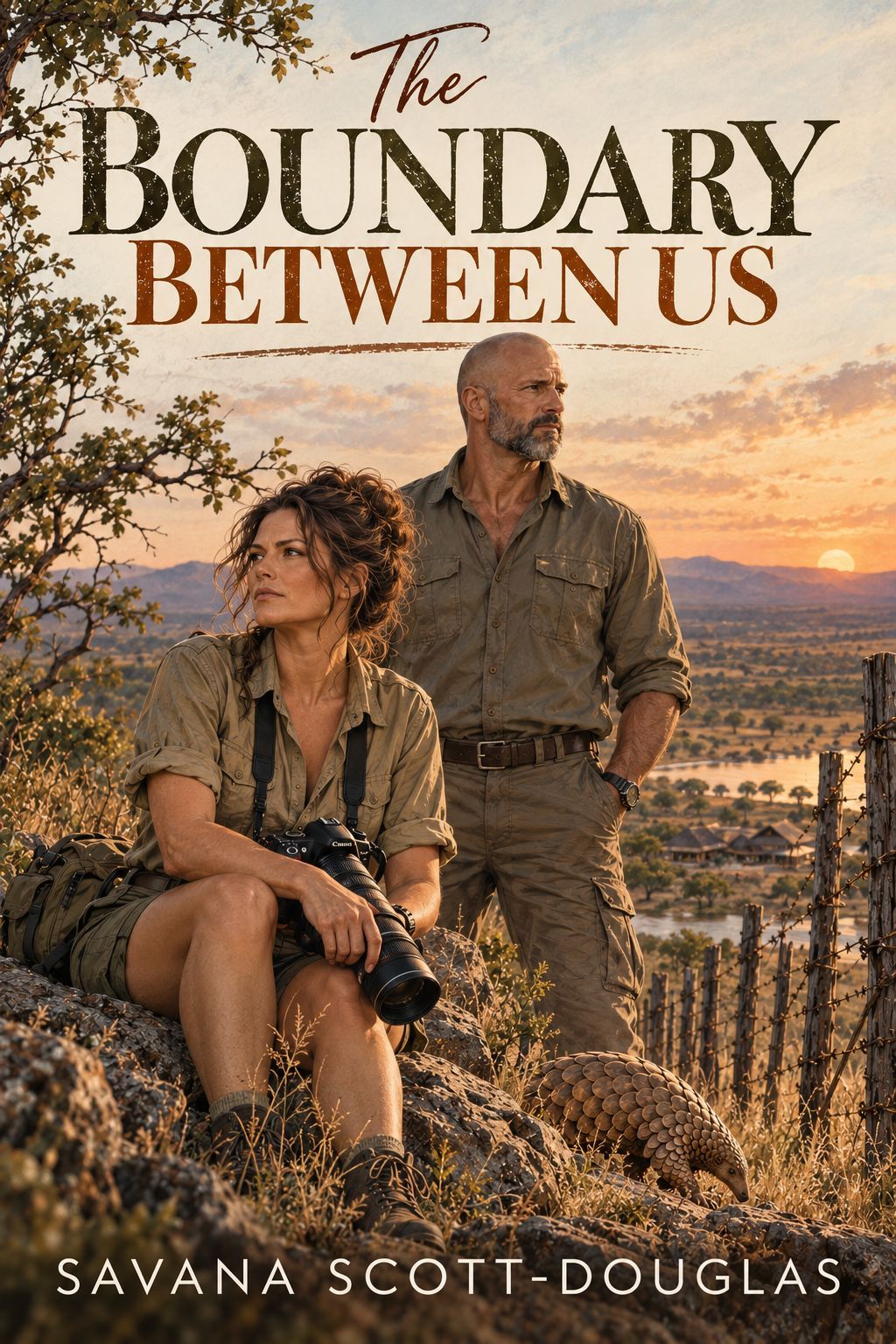
Book One
The Boundary Between Us
An inherited wildlife reserve. A neighbour she never expected. And a secret someone was prepared to protect at any cost.
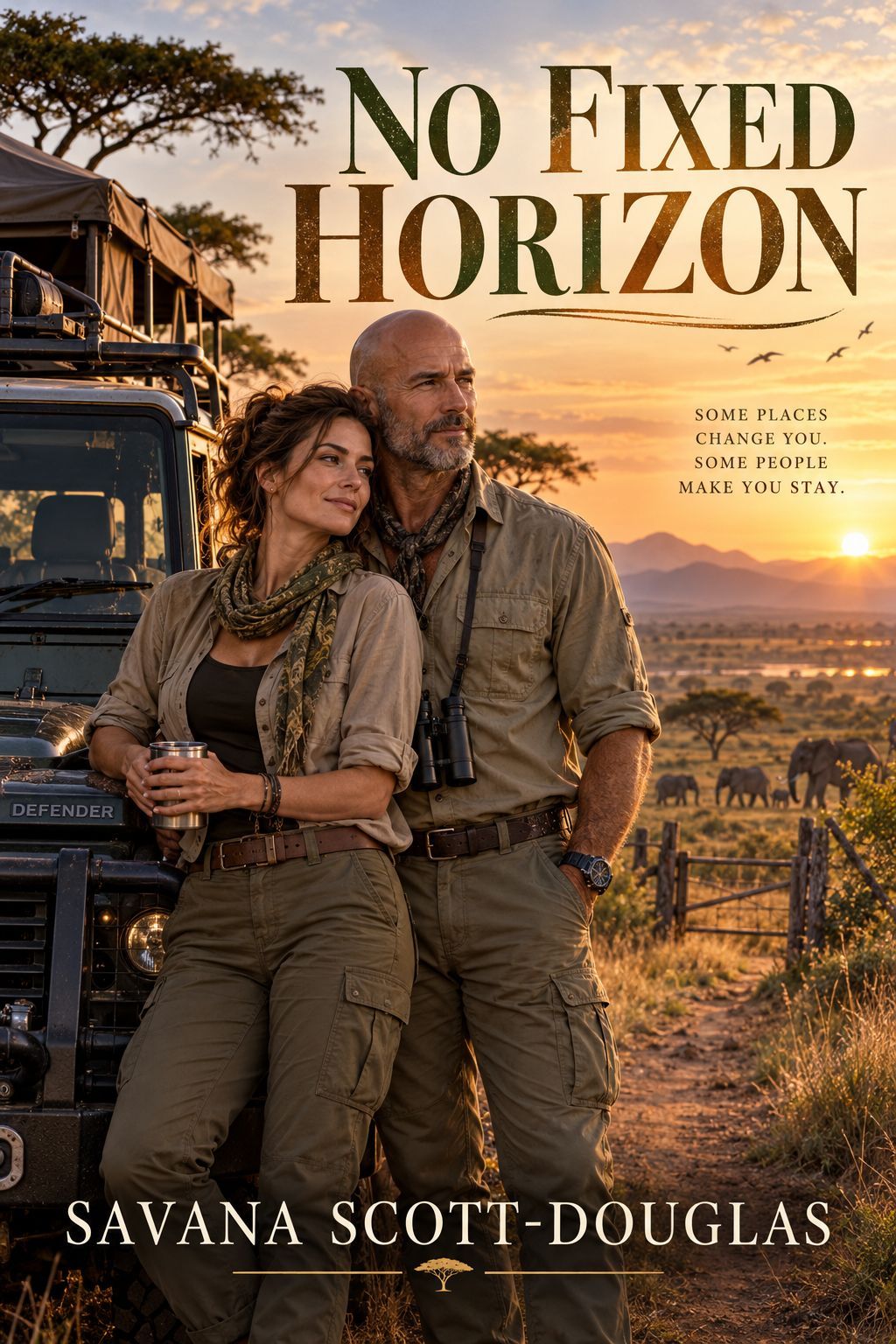
Book Two
No Fixed Horizon
Alexis and Eric have chosen each other. Now they have to build a life that can survive family, ambition, old wounds and the realities of protecting the wild place they both call home.
Book Three
What We Keep Wild
Coming soon. More from Kestrel Ridge is on its way.
Questions from Readers
Why I Set The Boundary Between Us on a Private African Reserve
I could have set The Boundary Between Us almost anywhere.
A city. A farm. A small town. Somewhere quieter, easier, more predictable.
But the story would not have been the same.
A private African reserve gives you something most settings do not: beauty and pressure existing side by side.
From the outside, people often see the obvious things first. Open landscapes. Wildlife. Sunsets. Game drives. A certain romantic idea of life in the bush.
What they do not always see is everything underneath that.
Fences need maintaining. Staff need managing. Wildlife needs monitoring. Animals get injured. Neighbouring properties disagree. Conservation decisions cost money. Tourism has to support the land without overwhelming it. Security matters. Weather matters. Politics matters. And sometimes the animal you spent hours trying to find appears in the middle of the road five minutes after you give up.
That tension interested me far more than simply setting a love story somewhere beautiful.
Kestrel Ridge gives Alexis and Eric very little room to avoid each other. Their decisions affect land, wildlife and other people. They cannot simply walk away every time something becomes uncomfortable.
And neither of them is particularly good at backing down.
That seemed like a useful place to begin.
The reserve also gave me room to write about things I care about: conservation, wildlife crime, the realities behind protecting wild places, and the people whose lives revolve around that work.
The romance matters enormously.
But so does everything happening around it.
That is what I wanted Kestrel Ridge to feel like.
Not scenery.
A living place with consequences.
Is Kestrel Ridge a Real Place?
No.
Kestrel Ridge is entirely fictional.
There is no reserve hidden somewhere in South Africa waiting for readers to arrive at the gate and ask for Alexis Morgan.
Probably for the best.
But the world around Kestrel Ridge is drawn from reality.
I have spent years working and travelling across Africa, and many of the smaller details that find their way into the books come from things I have seen, heard or experienced along the way.
The way reserve roads change after rain.
The constant negotiation between conservation and money.
The personalities you find in wildlife and tourism circles.
The strange intimacy of living and working somewhere remote.
The fact that a perfectly organised day can be destroyed by an elephant, a broken vehicle or somebody making a decision they absolutely should have discussed with everyone else first.
Those details are real.
The reserve itself is not.
Kestrel Ridge was created because fiction gives me the freedom to take real pressures, real conservation issues and real human dynamics and combine them without pretending I am documenting a specific place.
The geography is invented.
The characters are invented.
The events are invented.
But the atmosphere is informed by a world I know well.
That distinction matters to me.
I want the books to feel authentic without turning real people or real places into fictional props.
The Conservation Issues Behind The Boundary Between Us
Conservation is often presented as something uncomplicated.
Protect the wildlife.
Save the land.
Stop the poachers.
In reality, it is rarely that simple.
Wild places cost money to protect.
Wildlife populations need active management.
Private landowners, communities, tourism operators, researchers, veterinarians and conservation organisations may all want the same broad outcome while disagreeing completely about how to achieve it.
That complexity sits underneath The Boundary Between Us .
The wildlife crime storyline is fictional, but the pressures behind it are not.
Wildlife trafficking remains a serious problem across parts of Africa. Pangolins, rhinos and many other species are targeted because there is money to be made from them.
But criminal activity is only one part of the picture.
Conservation also involves much less dramatic decisions.
How many animals can an area support?
When do you intervene?
Who pays for veterinary work?
How do private reserves remain financially viable?
What happens when neighbouring landowners disagree?
How much tourism is necessary to fund protection without damaging the very environment people are coming to see?
Those are not glamorous questions.
They are, however, often the important ones.
I did not want Kestrel Ridge to exist in a world where conservation simply meant loving animals.
Alexis can care deeply about the reserve and still have to think about budgets.
Eric can understand wildlife and still disagree with her about how something should be handled.
People can have good intentions and still make poor decisions.
That tension is much closer to reality.
And, from a novelist's point of view, considerably more interesting.
Why My Romantic Leads Aren't Twenty-Five
There is absolutely nothing wrong with being twenty-five.
I simply did not want to write about it.
Alexis and Eric arrive in The Boundary Between Us with lives already behind them.
They have histories.
They have made mistakes.
They have responsibilities.
They have opinions that were formed long before they met each other.
That changes the shape of a relationship.
Neither of them is waiting for another person to tell them who they are.
They already know.
Or at least they think they do.
I find that much more interesting.
Adult relationships come with practical complications younger characters do not always have.
Children.
Former partners.
Property.
Careers.
Family expectations.
Financial decisions.
Habits that have had years to become deeply irritating.
You are not simply deciding whether you like someone.
You are deciding whether that person fits into a life that already exists.
And sometimes the answer is inconvenient.
I also wanted to write characters who remain desirable, complicated and capable of falling deeply in love without behaving as though romance belongs exclusively to people in their twenties.
It does not.
People do not stop wanting intimacy, adventure, sex, connection or reinvention because they have accumulated a few more birthdays.
If anything, knowing what can go wrong often makes choosing someone more meaningful.
Alexis and Eric are not blank pages.
That is precisely why I wanted to write them.
Writing Africa Without Turning It Into Scenery
Africa has been used as a backdrop in fiction for a very long time.
Beautiful sunset.
Elephant in the distance.
Perhaps a dramatic tree.
Then the actual story continues.
I wanted something different.
If I was going to set these books in Africa, then the place needed to affect what happened.
Weather changes plans.
Distance matters.
Wildlife matters.
Infrastructure matters.
Land ownership matters.
Tourism matters.
Conservation policy matters.
People's livelihoods matter.
The environment should be able to create opportunity, conflict and consequence.
Otherwise the story could simply have been moved somewhere else.
One of the things years of travelling and working across Africa has taught me is that there is no single "Africa".
The continent is enormous.
South Africa is not Botswana.
Botswana is not Kenya.
Kenya is not Tanzania.
A private reserve outside the Kruger ecosystem is not interchangeable with the Serengeti or the Okavango Delta.
The landscapes, communities, industries and histories are different.
So I try to resist the vague version of Africa sometimes used in fiction.
The books are romantic about wild places because I am romantic about wild places.
But they are not meant to pretend those places are simple.
Beauty and difficulty frequently coexist.
That is part of what makes them worth writing about.
Where Alexis Morgan Came From
Alexis did not arrive fully formed.
She began with a question.
What kind of woman inherits something enormous that she never expected to be responsible for?
Not simply land.
Responsibility.
History.
Staff.
Animals.
Money.
Expectations.
And perhaps most importantly, other people's opinions about what she should do with all of it.
I knew fairly quickly that I did not want her to become the familiar fictional woman who arrives somewhere new and needs a knowledgeable man to explain everything to her.
Alexis is capable.
She asks questions because intelligent people ask questions, not because she is helpless.
She can make mistakes without being incompetent.
She can care deeply without becoming sentimental.
And she can be difficult.
That part was important.
Women in fiction are often allowed to be strong only if their strength remains pleasant.
Alexis is not always pleasant.
She pushes.
She argues.
She wants answers.
She occasionally continues a conversation long after everybody else would prefer she stop.
Some of that stubbornness is useful.
Some of it absolutely is not.
That makes her human.
There are inevitably fragments of real experience inside characters I write, but Alexis is not a portrait of one person.
She is a fictional woman built from observation, imagination and the simple belief that female characters should be allowed the full range of human behaviour.
Including being wrong.
Why Eric Taylor Says So Little
Because Eric does not believe every silence needs filling.
And because there are few things more exhausting than a fictional man who spends three paragraphs explaining his emotional state every time something happens.
Eric communicates.
He simply does not always do it with words.
He notices things.
He fixes things.
He watches.
He acts.
And when he does speak, he generally prefers to have something worth saying.
That does not mean he is emotionally unavailable.
In fact, I think that distinction matters.
Silence and emotional absence are not the same thing.
Eric feels deeply.
He simply does not perform those feelings for everyone around him.
His background also shaped the way I wrote him.
He is used to competence, responsibility and environments in which unnecessary noise does not improve a situation.
That carries into his personal life.
Unfortunately for him, Alexis is not particularly interested in decoding meaningful silences indefinitely.
Which creates a problem.
And occasionally an argument.
I like the contrast between them.
Alexis often wants the conversation finished properly.
Eric sometimes believes it finished three sentences earlier.
Neither is always right.
That friction gives them much of their rhythm.
And when Eric eventually does say something important, I want it to matter.
If he spoke constantly, it probably wouldn't.
The Unexpected Appeal of Tarryn Jones
Tarryn was not supposed to be one of those characters.
You know the type.
The character who walks into a story, says exactly what everyone else is avoiding, irritates half the room and somehow becomes impossible to ignore.
That was Tarryn.
She began as a highly competent veterinarian with very little patience for nonsense.
Then she kept getting interesting.
Part of Tarryn’s appeal, I think, is that she is not designed to be universally likeable.
She is dry.
Blunt.
Occasionally cutting.
Often the smartest person in the conversation and usually aware of it.
But she is also deeply competent and profoundly committed to the work she does.
That matters to me.
Women in fiction are sometimes expected to earn affection by becoming softer, warmer or easier to understand.
Tarryn has no interest in doing any of those things.
She cares.
She simply does not package that care attractively for other people.
If an animal needs her, she is there.
If somebody is behaving badly, she will probably tell them.
If she thinks you are wasting her time, you are unlikely to leave the conversation uncertain about it.
Underneath all of that is somebody much more vulnerable than she would ever willingly advertise.
That combination made her increasingly difficult to keep in the background.
And once a character starts doing that, there is usually very little a writer can do about it.
Tarryn was supposed to support the story.
Instead, she started building one of her own.
Wildlife Trafficking and The Boundary Between Us
Wildlife trafficking sits beneath part of the central mystery in The Boundary Between Us .
The events in the novel are fictional.
The problem is not.
Wildlife trafficking is an international criminal trade involving animals and animal products moved through complex networks for profit.
The species involved vary enormously, but the underlying pattern is often the same.
Somewhere, somebody has decided that a living animal is worth more once it has been captured, killed, cut up or sold.
That reality is difficult enough.
What interested me as a writer was everything surrounding it.
Wildlife crime does not happen in isolation.
It intersects with poverty, organised crime, corruption, international demand, weak enforcement, local knowledge and enormous amounts of money.
And because many wildlife areas are remote, the people trying to protect animals are often working across huge landscapes with limited resources.
That creates vulnerability.
In The Boundary Between Us , I wanted wildlife crime to feel less like a convenient thriller device and more like something capable of reaching into ordinary lives.
A missing animal is not simply a statistic to the people responsible for that land.
A security breach is not abstract.
Trust matters.
Information matters.
Knowing who should and should not be where matters.
And sometimes the most dangerous part of a crime is not the person standing in the bush.
It is the person who knew enough to make sure they could get there.
I deliberately chose not to turn the conservation storyline into a lecture.
The book is still fiction.
But I wanted the threat behind the story to come from something real.
Because for the people working to protect wildlife across Africa, it is.
Why Conservation Makes Such a Good Setting for Fiction
Conservation is full of conflict.
That is not necessarily what people expect to hear.
From the outside, the goal seems straightforward.
Protect wildlife.
Preserve habitat.
Keep wild places wild.
The problem is that almost everything underneath those goals is complicated.
Land costs money.
Wildlife has to be managed.
People live around protected areas.
Communities need economic opportunities.
Tourism brings income and pressure at the same time.
Different species require different interventions.
Neighbouring landowners may have completely different priorities.
Researchers, guides, veterinarians, conservationists and business owners can all care deeply about the same place while disagreeing about what should happen next.
For fiction, that is incredibly useful.
Nobody has to be a villain for a conflict to exist.
Two intelligent people can look at exactly the same problem and reach completely different conclusions.
Both can have good reasons.
Both can be partly right.
That is usually far more interesting than good people on one side and bad people on the other.
Conservation also raises difficult questions about ownership and responsibility.
Who gets to decide what happens to land?
Who pays to protect it?
When should humans intervene in nature?
When should they leave it alone?
What happens when protecting one species creates pressure somewhere else?
How much tourism is too much?
What happens when the financially sensible decision and the conservation decision are not the same?
Those questions give characters something meaningful to fight about.
They also create stakes that exist beyond the romantic relationship.
Alexis and Eric can be angry with each other and still have a reserve to protect.
Tarryn can dislike somebody intensely and still have to work beside them when an animal is injured.
People still have jobs to do.
That, to me, makes relationships more interesting.
Life does not stop while two people decide how they feel about each other.
And on a wildlife reserve, it certainly does not wait politely for them to finish the conversation.